6 Best Outdoor LED Strip Lights for Different Uses
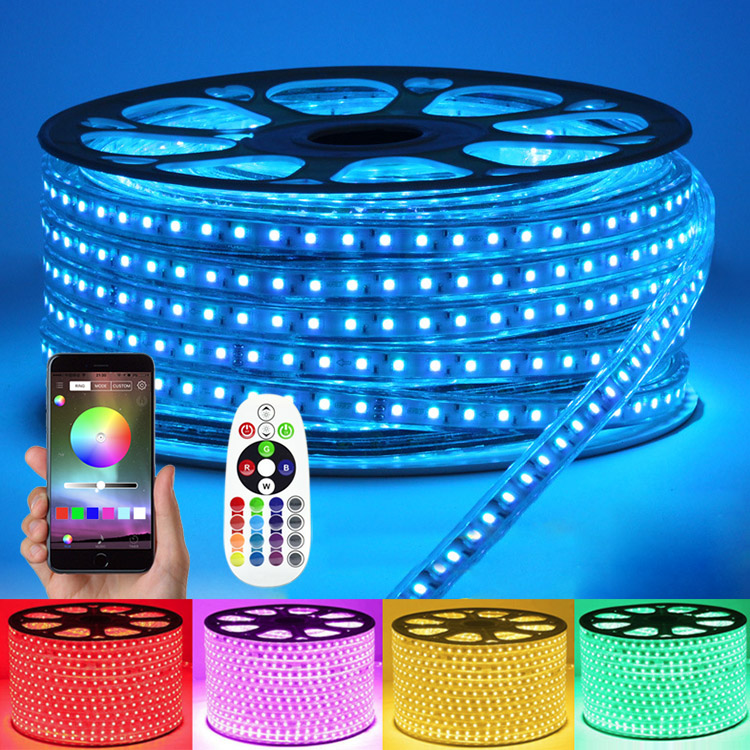
LED strip lights work outdoors, provided they’re built for it. Outdoor-rated strips are sealed in a silicone waterproof layer that resists weathering and UV, which is what lets them survive sun, rain, and temperature swings year after year.
Two things trip people up, though. First, the strip isn’t the only thing outside — the controller and power supply need a proper waterproof rating too. Second, anywhere you cut or join an outdoor strip has to be resealed, or water finds its way in and shorts the run.
With that out of the way, here are six types of outdoor LED strip lights worth knowing about, organized by what each one is actually good at:
- High voltage RGB outdoor strips
- Low voltage 12V RGB outdoor strips
- Constant current RGBW waterproof strips
- Quad-row 3528 super bright strips
- Waterproof COB strips
- Motion sensor stair lights for outdoor decks
1. High Voltage RGB Outdoor LED Strip Lights
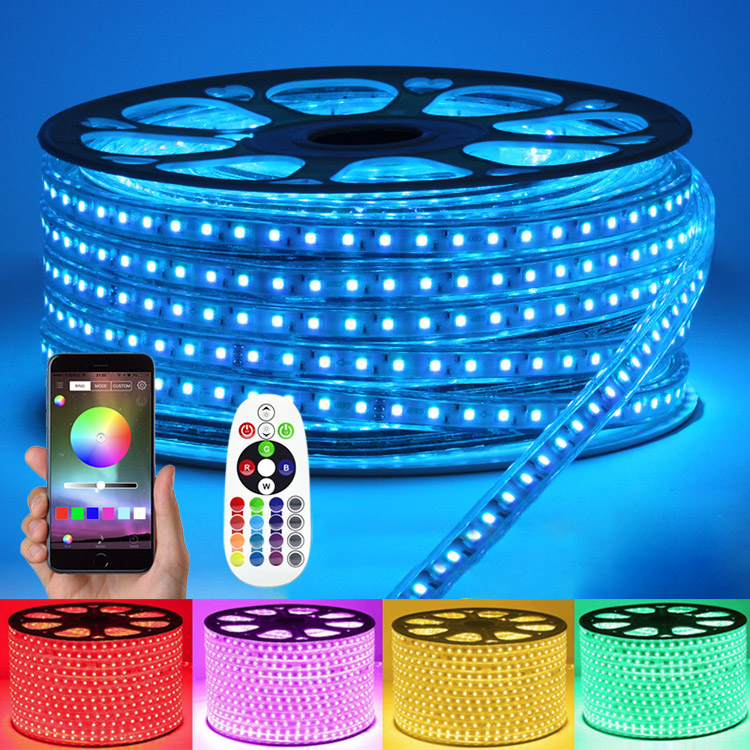
High voltage strips run on AC — 110V or 220V — and plug straight into an outlet with no transformer in between. They come with the full range of RGB color modes.
Their real advantage is distance: with no voltage drop, a single run can go extremely long. These strips come in lengths of 10m/33ft all the way up to 100m/328ft, which is why they’re the pick for building outlines, rooflines, and bridge lighting.
They’re sold as bare strips or in kits with a controller (and an amplifier for the longest runs). The one caveat is inherent to the design: it’s mains voltage outdoors, so treat the installation with the respect you’d give any AC wiring.
2. Low Voltage RGB 12V LED Strip Lights Outdoor
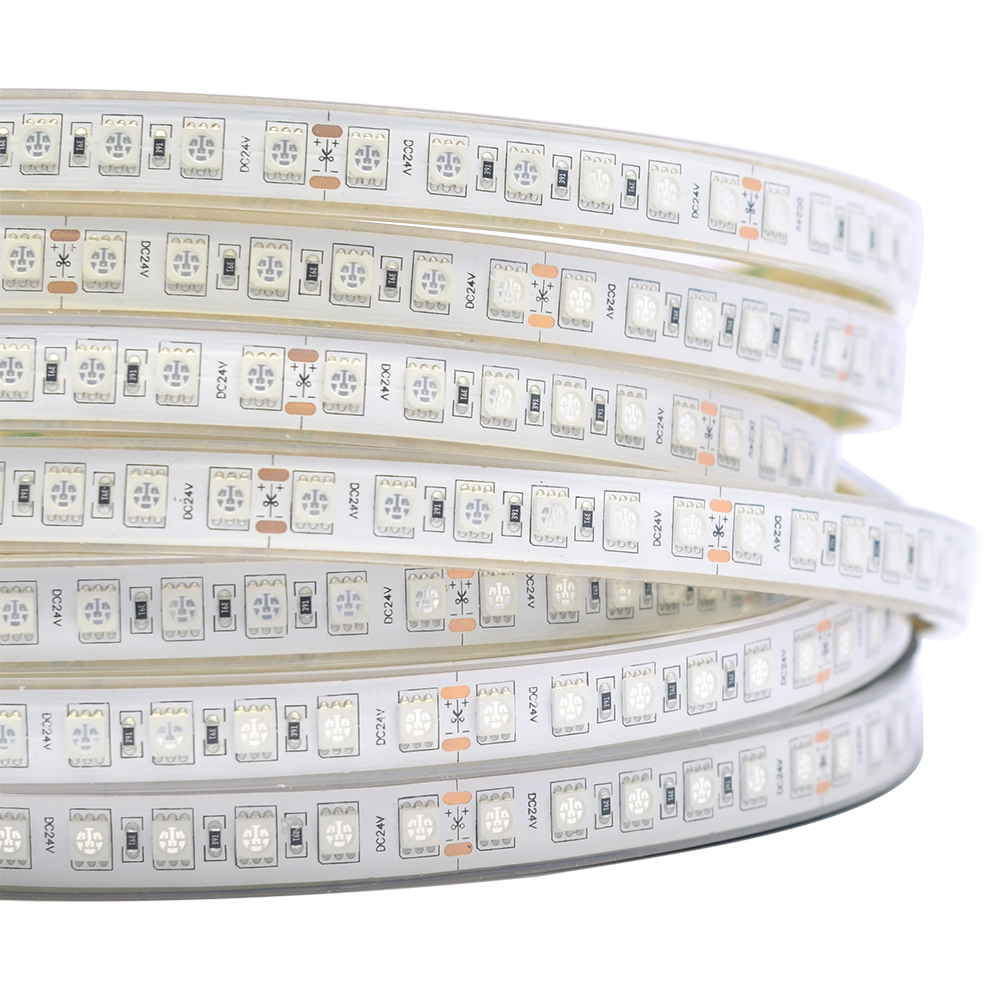
12V DC is the most common strip voltage around, the same standard used in cars, boats, and RVs. Its big selling point is safety — at low voltage there’s no shock risk if you touch it. You connect the strip to a 12V power supply, and the power supply to the outlet.
The trade-off is voltage drop: low-voltage strips top out around 5m/16.4ft per roll, so they suit smaller projects — deck edges, patios, outdoor kitchens, bathroom and kitchen accents.
How to choose between 12V and 24V outdoor strips
12V strips can be cut at shorter intervals, so choose them when cutting precision matters. 24V strips hold color consistency over longer runs, so choose them for distance. The two aren’t interchangeable — a 12V supply won’t run a 24V strip — and if you already own a 12V power supply, sticking with 12V saves you buying another one.
3. Constant Current RGBW Waterproof LED Lights
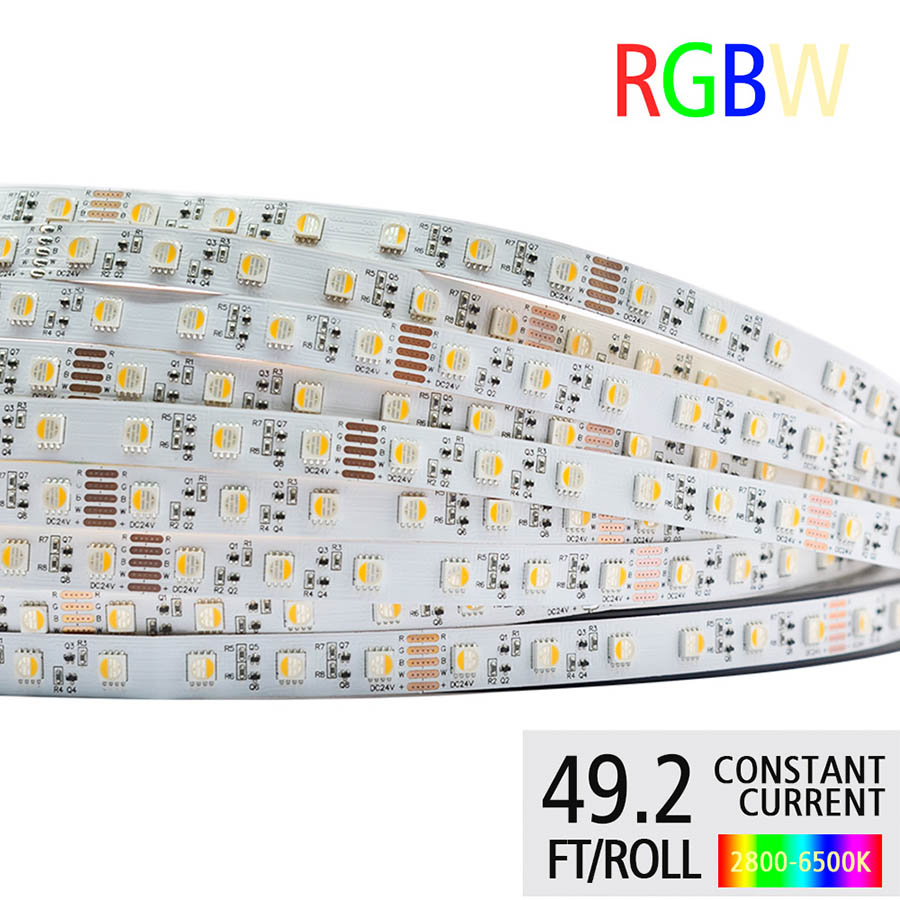
Constant current strips use current-regulating ICs so that every LED along the run holds the same brightness and color. That makes them the low-voltage answer to long-distance projects: the safety of low voltage with runs of 5m, 10m, 15m, or 20m without visible dimming at the far end.
Waterproofing comes in four grades; for outdoors you want IP67 or IP68. IP67 handles rain and general weather but shouldn’t sit submerged; for pools, fountains, or garden water features, IP68 is the one that can live in water.
The “W” in RGBW buys you a dedicated white channel on top of the colors, in two temperature options: 3000K warm white for a cozy evening atmosphere, or 6000K daylight white where you need functional task lighting. Kits with a WiFi controller and power supply included save the compatibility guesswork.
4. Waterproof Quad Row 3528 Super Bright LED Strip
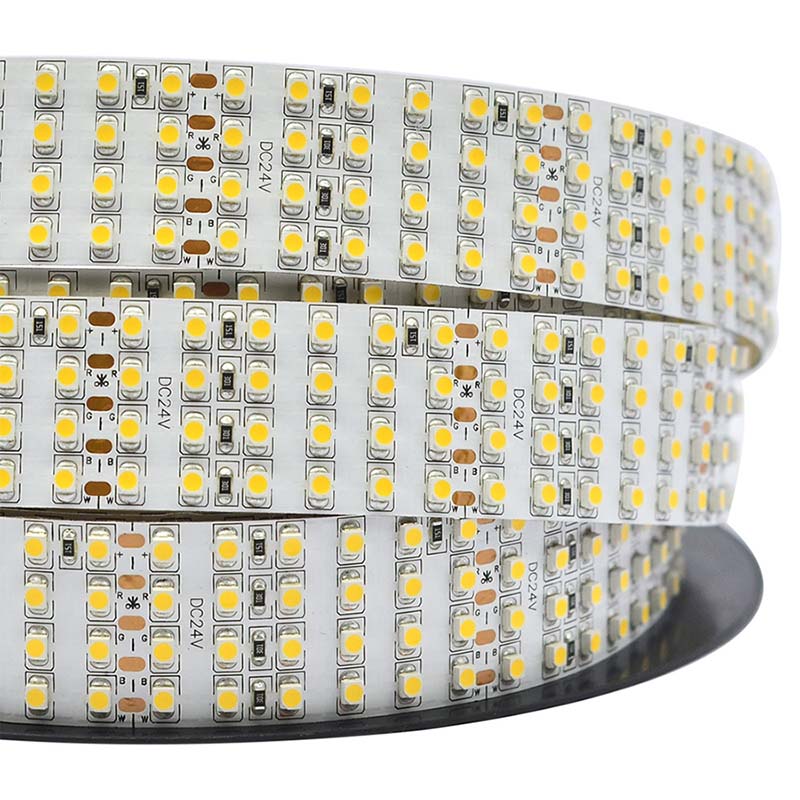
When the job calls for raw brightness and you have the space, quad-row strips pack four rows of LEDs into one strip.
The color menu is wide: 3000K soft white, 4000K natural white, 6000K pure white, 7000K cool white, plus red, green, blue, yellow, and an RGB+6000K combo. Lengths of 1m, 2m, or 5m suit smaller high-brightness projects, and kit versions bundle the controller and power supply.
One physics-imposed limit: all those LEDs generate real heat, so quad-row strips can’t be fully potted in glue for IP68. They’re sheathed in silicone sleeves instead — weatherproof, but not for immersion.
5. Waterproof COB LED Strip Lights
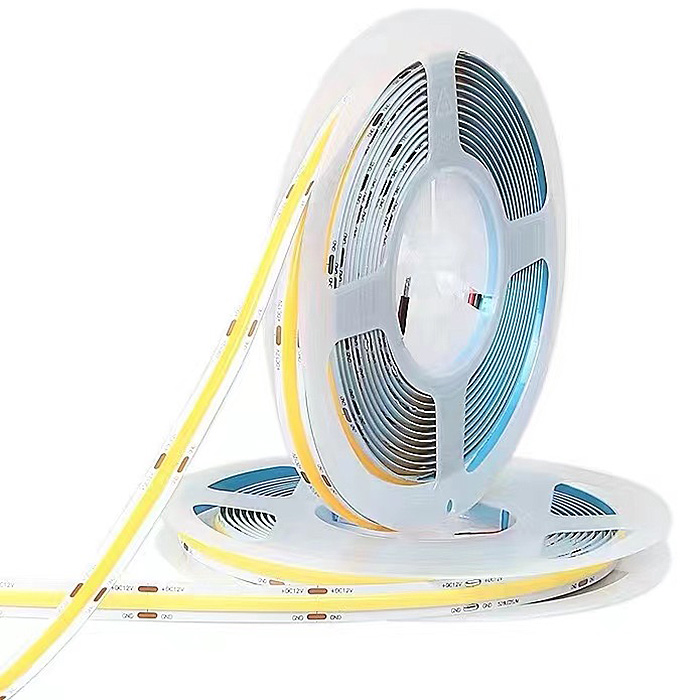
COB strips solve the one aesthetic complaint about classic SMD strips: visible dots. The LEDs are packed densely enough to produce one continuous, soft line of light, and the strip itself is more flexible.
These run on 12V or 24V and come in about every single color you could want: 2200K and 2700K warm whites, 3000K soft white, 4000K neutral white, 6500K daylight white, red, green, blue, pink, ice blue, and amber. Three density/width combinations are available — 384 or 480 LEDs/m at 8mm wide, and 512 LEDs/m at 10mm — all IP67 waterproof.
Kits pair the strip with a controller, a power adapter, or both. The RF remote dimmer is genuinely nice: a touch color ring with 256-level dimming from 0.1% to 100%, one-key presets at 25/50/75/100%, and it remembers your last brightness through a power cut.
6. Motion Sensor Stair Lights for Outdoor Deck
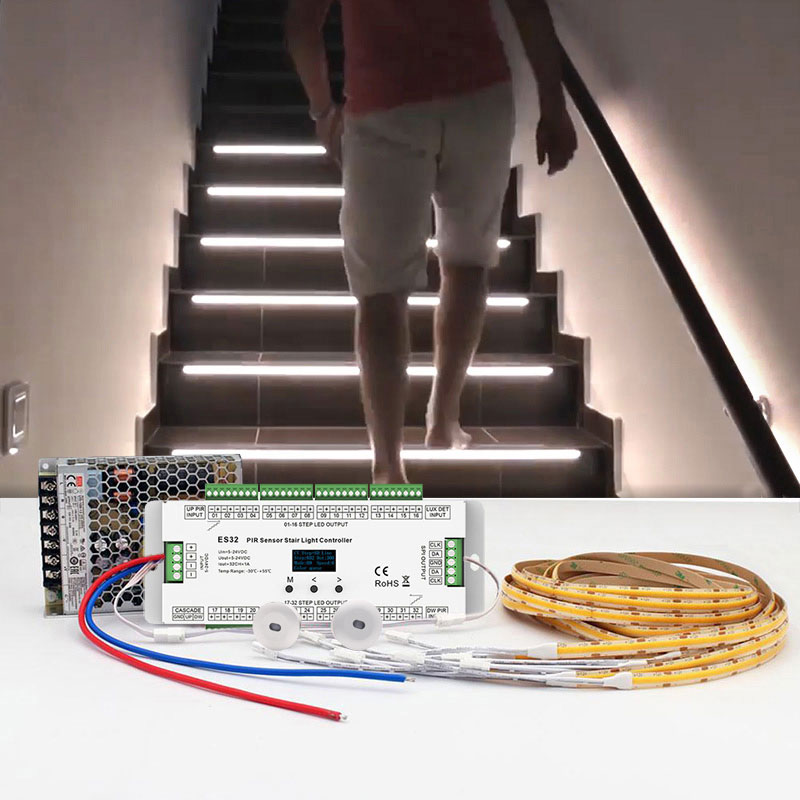
Deck stair lighting used to mean a switch at the top of the stairs. Motion-sensor stair kits skip that entirely: the lights detect you approaching, illuminate the steps as you go, and shut themselves off a few seconds later — no wasted energy, no fumbling in the dark with full hands.
Outdoor versions weatherproof the whole chain — the COB step lights themselves, the controller, the power supply, and every connection between them — so the system holds up in rain and weather, not just the strip.
If you’ve read my kitchen light saga, you already know how I feel about motion-sensor lighting: once you have light that just appears when you need it, switches start feeling like a chore. Stairs in the dark are exactly where that convenience doubles as safety.