6 Best LED Strip Lighting Ideas for Rooms
Lighting does more for a room’s look than almost anything else you can change, especially once the sun goes down. That’s why LED lighting is one of the first things people reach for when they want to upgrade a space without renovating.
There are plenty of LED fixtures to choose from, but strip lights have earned their spot in room lighting for two simple reasons: they stick almost anywhere, and you can cut them to the length you need.
That flexibility means they work all over the house — living room, bedroom, game room, dining room. Below are the setups I think are worth copying, and you can mix and match them into a lighting plan that fits your own space.
LED Strip Lighting Ideas for the Living Room
The living room has to do double duty: it’s where you read, watch TV, and host people, so the lighting needs to be practical — but it’s also the room guests see most, so it should set a mood. The goal is light that works for everyday tasks while still making the space feel put together.
A few living room setups that deliver both:
1. Ceiling LED Strip Lights
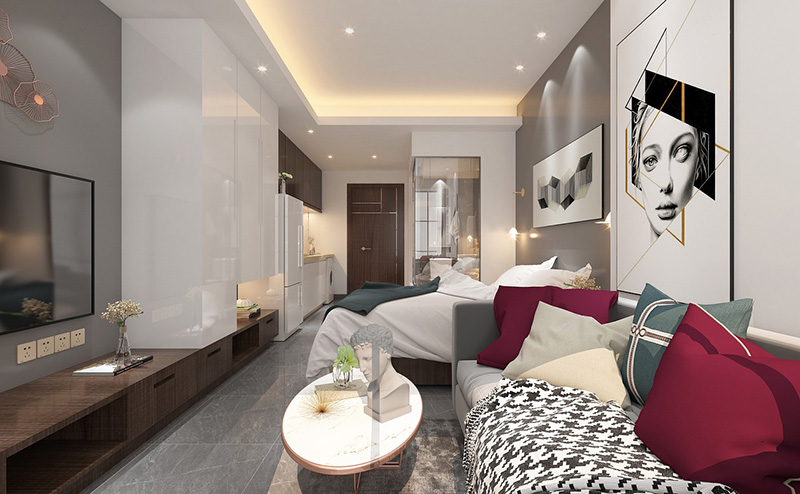
Running a strip around the ceiling adds a glow to the room without any visible fixture. Tucked into a recessed ceiling or cove, the strip itself disappears entirely — all you see is soft light washing into the space.
Angle the strips toward the walls and you get a “wall washer” effect that brings out the texture of the wall finish. It’s a subtle trick, but it makes a flat room feel designed.
One practical tip before you buy: measure the ceiling run first so you know exactly how much strip you need for the full loop.
2. TV Light Strip
Backlighting behind the TV adds ambient light that matches what’s on the screen.
The better systems adjust color and brightness dynamically with the content, which makes movies and games feel more immersive — they work with HDMI devices like a PS4 or Switch, a computer, or a set-top box.
Addressable strips made for TVs typically come with several modes: screen sync, sound-reactive, soft ambient, rainbow, static single color, breathing, and chasing effects. Screen sync is the one you’ll actually keep using.
3. Baseboard Lighting
Baseboards are in almost every room anyway — pairing a strip light with an aluminum profile along the skirting turns them into a lighting feature.
Aim the light up and down the wall and you get that same soft wall-washing haze; aim it sideways and you get a crisp line of light that emphasizes the room’s shape. Both look far more intentional than a plug-in night light.
How high to mount it depends on your ceiling: in rooms with lower ceilings, strips sitting right at floor level look best, while taller rooms can handle the strip mounted a bit higher up.
And if the baseboard light is mainly for nighttime — hallway trips, kids’ rooms — motion-sensor control makes far more sense than a switch. It’s the difference between lighting you use and lighting you forget to turn on.
LED Strip Lighting Ideas for the Bedroom
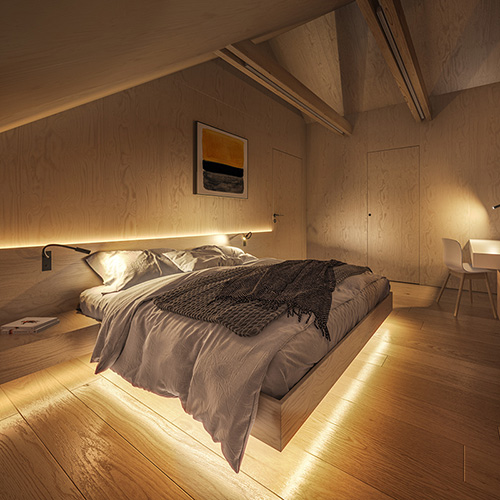
In bedrooms, the headboard and bed frame are the natural mounting spots. Bedside and under-bed strips make excellent night lights — and with a motion sensor, they only come on when your feet actually hit the floor.
The color of the light matters more here than anywhere else in the house. Our bodies respond to the color temperature of light throughout the day, and at night, low color temperature is what you want: it doesn’t interfere with melatonin, the hormone that helps you fall asleep.
Around 3000K “soft white” is the sweet spot — a warm, yellowish glow that reads as cozy rather than clinical. If you want the option to play, color-changing strips give the bedroom some fun without giving up the warm setting for bedtime.
Display shelves and cabinets in the bedroom benefit too. A short strip on a display stand lifts whatever you’ve put there out of the shadows.
For shelves and cabinets with corners, corner-mount aluminum profiles fit the angle neatly and cast light at 90 degrees, and a channel recessed into the shelf itself keeps everything flush — light without any visible hardware.
LED Strip Lighting Ideas for the Game Room
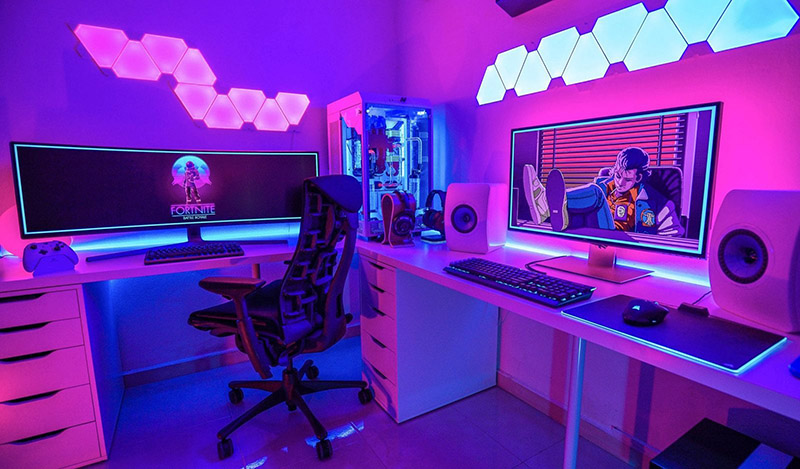
A game room is the one space where restraint is optional — colorful, dynamic lighting is the point, and lighting that reacts to what’s happening on screen pulls you further into the game.
The usual suspects for color-changing coverage: behind the monitor or TV, along shelving, and around the ceiling perimeter.
Don’t overlook the desk itself. Strip lights are thin enough to trace the outline of a computer desk, which gives the whole battle station a clean, defined edge.
LED Strip Lighting Ideas for the Dining Room
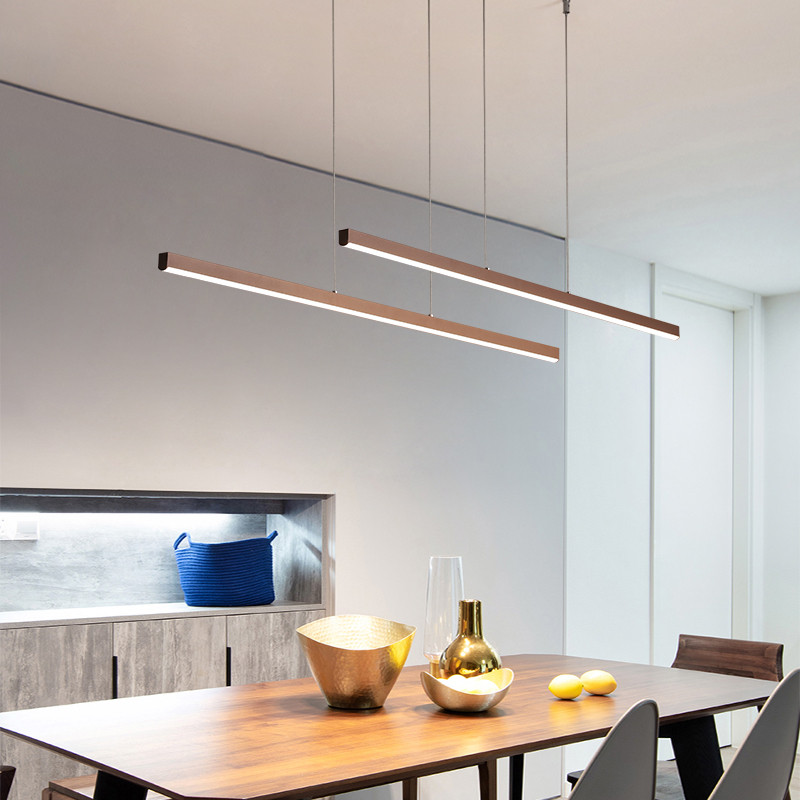
Dining room lighting revolves around the table, and nothing beats a pendant hung above it — roughly 65–80 cm above the tabletop, adjusted for your fixture and preference.
At that height the light lands on the table where you want it, glare stays out of everyone’s eyes, and since it hangs over the table’s center, nobody bangs their head on it.
Warm white in the 2700–3000K range genuinely makes food look more appetizing. If you want warmth and the option of brighter light, strips with adjustable color temperature let you dial in the right white for the moment.
One spec worth checking: CRI (color rendering index). High-CRI light shows food in its true colors; low-CRI light makes dishes look dull and is harder on the eyes over a long dinner.
Are LED Strip Lights Good for Rooms?
Yes — and not just for looks. LEDs are energy-efficient, drawing less power and giving off less heat than traditional bulbs.
They earn their place even in the bedroom, the room most people worry about. Warm LED light helps you wind down after a long day, and red light in particular supports melatonin production — useful if falling asleep doesn’t come easily.
Room lighting does more work than most people give it credit for. Strip lights are one of the cheapest ways to find that out for yourself.